Tensions Boil Over in KuGompo: The 2026 East London Anti-Foreigner Protests
On March 30, 2026, the streets of KuGompo (formerly East London) were transformed into a battlefield as a peaceful march against the “coronation” of a foreign tribal leader rapidly descended into violent chaos. The events have sent shockwaves through the Eastern Cape, reigniting a national debate over immigration, traditional sovereignty, and the rising tide of xenophobic sentiment in South Africa.
The Catalyst: A “Royal” Dispute
The spark that ignited the powder keg was the alleged coronation of Solomon Egbonna Eziko, a Nigerian national, as the local “king” of the Igbo tribe within East London. To many local residents and traditional leaders, this was seen not merely as a cultural ceremony, but as a direct affront to South African sovereignty and the established authority of local Xhosa traditional leadership.
Traditional leaders in the Eastern Cape were among the first to voice their outrage, claiming that foreign nationals were “taking over” local communities. Buffalo City metro spokesperson Bongani Fuzile clarified that the coronation had taken place without any consultation with local traditional houses, labeling such claims to land and authority as “reckless.”
A March Turned Volatile
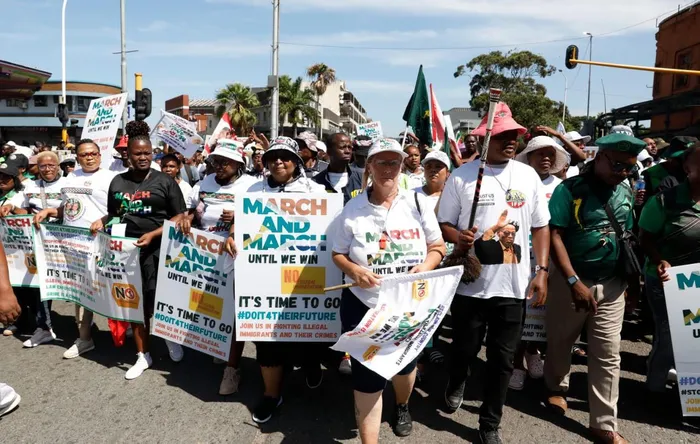
The demonstration began on Monday morning as a march from the beachfront toward the City Hall. The crowd was a mosaic of disgruntled residents, civil society groups, and members of prominent anti-immigrant movements. Notably, the “March and March” movement—led by Jacinta Ngobese-Zuma—and Operation Dudula were central to the mobilization.
While the initial intent was to hand over a memorandum of demands to the mayor’s office, the atmosphere shifted after the petition was delivered. According to police spokesperson Brigadier Nobuntu Gantana, violence erupted when groups of participants moved away from City Hall into the business districts.
Timeline of Chaos:
- 10:00 AM: Protesters gather at the beachfront, singing struggle songs and waving placards.
- 11:30 AM: Memorandum delivered to City Hall; police maintain a heavy presence.
- 12:15 PM: Reports spread of a protester being stabbed, allegedly by a foreign national.
- 1:00 PM: Violence flares; shops are shuttered as looting begins in the city center.
Escalation and Targeted Attacks
The situation reached a breaking point following unconfirmed reports that a marcher had been stabbed by an immigrant. In the ensuing “retaliation,” the focus shifted from the “Igbo King” to foreign nationals in general.
Somali shop owners, who were not involved in the Nigerian coronation dispute, found themselves in the crosshairs. In the KuGompo city center, at least 15 vehicles were torched, and multiple butcheries and convenience stores were looted. Witness accounts describe groups of people arriving in taxis, jumping out to beat anyone they perceived to be a foreigner, and demanding to see asylum papers.
One Somali businessman, Adam Hassan, described a scene of helplessness as protesters removed his truck’s battery and car keys while he watched. “We have nothing to do with this ‘king’,” another businessman stated. “We are just here to run our businesses and survive.”
National and Political Context
The East London protest does not exist in a vacuum. It follows similar massive anti-immigrant demonstrations in Durban just days prior, where thousands marched under the banner of “March and March” and ActionSA. Political figures like ActionSA leader Herman Mashaba have argued that these protests are a symptom of a government that has failed to secure its borders and manage undocumented migration effectively.
However, human rights organizations and the national government have been quick to condemn the vigilantism. Eastern Cape Premier Lubabalo Oscar Mabuyane called for calm, stating that while community frustrations may be deep-seated, “no grievance justifies the destruction of property or the undermining of the rule of law.”
The Aftermath: A City on Edge
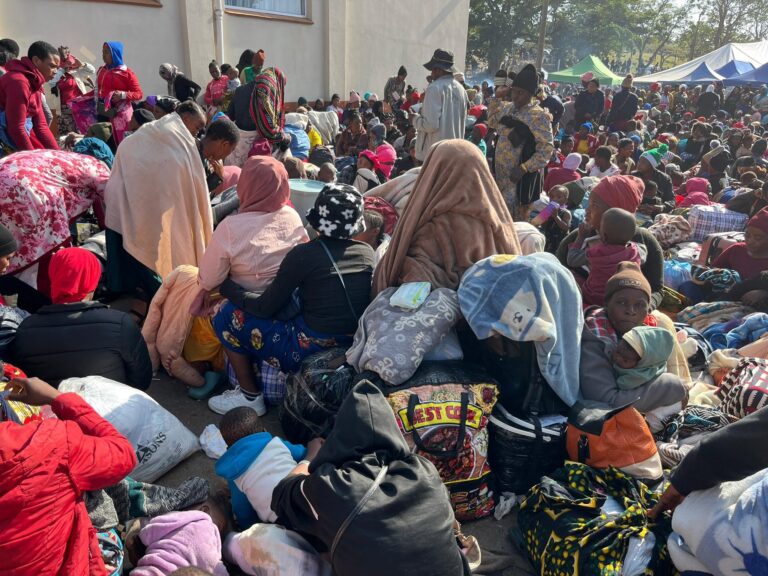
By the evening of March 31, the smoke had cleared from the streets, but the tension remained palpable. The South African Police Service (SAPS) deployed additional units to patrol the “hotspots,” and many foreign-owned businesses remained closed, fearing a second wave of attacks.
The events in KuGompo have highlighted several critical issues facing South Africa in 2026:
- Identity and Sovereignty: The sensitivity surrounding traditional titles and land authority.
- Economic Frustration: High unemployment rates (hovering around 32%) often manifest as anger toward immigrant-owned small businesses.
- Vigilantism: The growing influence of organized anti-immigrant groups that bypass formal legal channels.
Key Stakeholders and Their Stances
| Stakeholder | Primary Grievance/Stance |
| Traditional Leaders | Infringement on local sovereignty and traditional land rights. |
| March and March | Demanding mass deportation and stricter border controls. |
| Somali Community | Being unfairly targeted for a dispute involving a different nationality. |
| Government (SAPS) | Maintaining order and discouraging vigilantism and looting. |
As East London looks toward the coming weeks, the focus remains on whether the government can address the root causes of this friction or if the city is destined for a cycle of “reaction and retaliation.”
Would you like me to look into the government’s official response plan for the affected business owners in KuGompo?
About the Author