The Ghost of Day Zero: Navigating Cape Town’s 2026 Water Anxiety
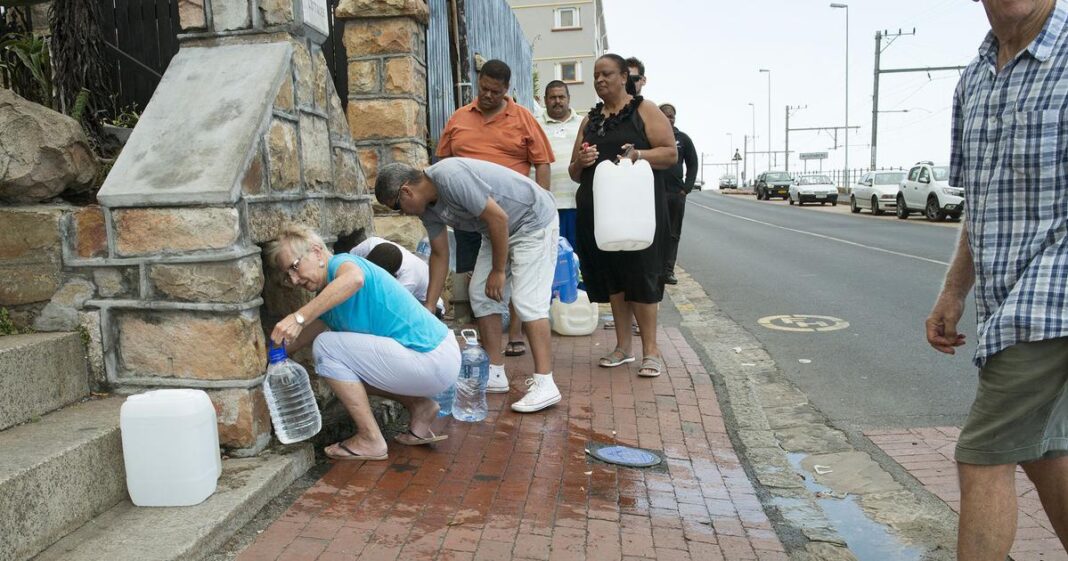
In the shadow of Table Mountain, a familiar tension is creeping back into the streets of Cape Town. It has been nearly a decade since the city made global headlines as the first major metropolis to face “Day Zero”—the hypothetical moment when municipal taps would run dry. Today, in March 2026, that ghost has returned to haunt the Mother City, as soaring temperatures, a surging population, and a “relentless” spike in water consumption push the city toward a new precipice.
On March 13, 2026, city officials issued an “Early Drought Caution,” a sobering reminder that while the dams aren’t empty yet, the window to prevent a full-blown crisis is narrowing.
The Current Reality: Heatwaves and High Demand
The primary driver of the current anxiety is a combination of environmental extremes and human behavior. A punishing heatwave in early 2026 pushed daily water usage to a staggering 1.07 billion liters per day—well above the city’s sustainable target of 975 million liters.
As of mid-March 2026, dam levels have dropped to approximately 57%, a sharp decline compared to the 73% recorded during the same period in 2025. While 50% may sound stable to an outsider, for Capetonians, it represents the “danger zone” before the unpredictable winter rains arrive. If consumption patterns don’t shift, officials warn that formal water restrictions could be implemented as early as November 2026.
The New Water Programme: A Race Against Time
Unlike the 2018 crisis, where the city was caught off-guard by a “one-in-400-year” drought, the Cape Town of 2026 has a roadmap: the New Water Programme (NWP). This ambitious R30 billion capital investment aims to add 300 million liters of water per day from non-rainfall-dependent sources by 2030.
The strategy focuses on four pillars of diversification:
- Desalination: The flagship Paarden Eiland Desalination Plant is moving into its procurement phase. This R5 billion project is designed to yield up to 70 million liters of potable water daily by 2030.
- Groundwater Abstraction: The city is tapping into the Table Mountain Group, Atlantis, and Cape Flats aquifers. Currently, groundwater accounts for less than 1% of the supply, but the goal is to raise this to 30%.
- Water Reuse: The Faure New Water Scheme will pioneer large-scale “potable reuse”—treating wastewater to a standard that is safe for drinking, adding up to 100 million liters per day to the grid.
- Alien Vegetation Clearing: In a low-tech but high-impact move, clearing invasive, “water-guzzling” plants from catchment areas is already returning billions of liters to the dams annually.
The Governance Challenge: PPPs and Tariffs
The 2026 crisis has also sparked a debate over how to fund these massive projects. The City Council recently approved a Public-Private Partnership (PPP) model for the desalination and reuse schemes. While officials argue this harnesses private sector innovation without “privatizing” water, residents are wary of the projected 6.5% real tariff increases expected by 2030 to cover the costs.
There is also a growing “trust gap.” Some civic groups argue that the city hasn’t done enough to fix its own infrastructure, pointing to the 23% water loss caused by leaks and bursts in the aging pipe network.
“We are entering a period where water security is no longer just about survival—it’s about economic competitive advantage,” says Zahid Badroodien, MMC for Water and Sanitation. “If we don’t invest now, we risk the same stagnation currently affecting Johannesburg’s infrastructure.”
Lessons Learned or Lessons Forgotten?
Perhaps the most significant challenge in 2026 is “drought fatigue.” After the heroics of 2018, when citizens halved their consumption almost overnight, many have reverted to old habits. Average per-person usage has climbed back to 178 liters per day, nearly double the 87-liter limit enforced during the height of the previous drought.
The psychology of the 2026 crisis is different. It is not an acute emergency (yet), but a chronic management challenge exacerbated by climate change. Scientists at the University of the Western Cape note that “new normal” rainfall patterns—characterized by rare, intense downpours rather than steady winter drizzle—make dam-based storage increasingly unreliable.
The Path Forward
As Cape Town navigates the rest of 2026, the message from the Civic Centre is clear: behavior change is the cheapest and fastest “source” of water. The infrastructure being built today won’t be fully online for another four years. In the meantime, the city’s resilience rests entirely on the taps of its five million residents.
The water crisis in Cape Town is a harbinger for global cities in the age of climate volatility. It proves that technology and engineering are only half the battle; the other half is a fundamental shift in how a society values every drop of its most precious resource.
About the Author